Pressure washing uses high-pressure water to clean hard surfaces like concrete, brick and pavers. Soft washing uses low pressure and cleaning solutions to remove mold, algae and dirt from siding, painted surfaces and roofs. Most homes need both, each on the right surface.
The two terms get mixed up all the time, and choosing the wrong method can damage your home. Castellan Pro Wash provides exterior cleaning in St. Charles and throughout the surrounding area, using each method only where it belongs.
Here’s a clear look at how each method works, which parts of your home need which one, what can go wrong with too much pressure, and what to ask before you hire anyone to clean your exterior.
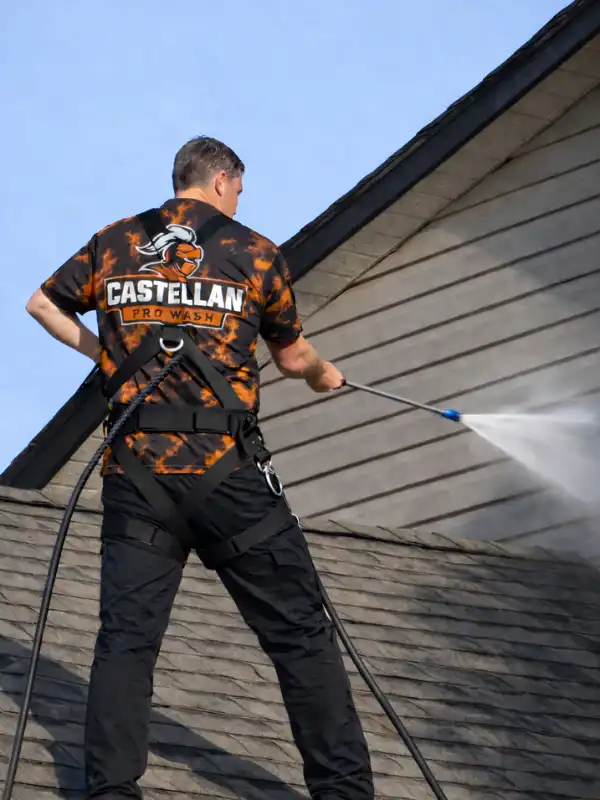
What Is Pressure Washing?
Pressure washing sprays water at high pressure to physically blast dirt, grime and stains off a surface. The force of the water does most of the work, which is why it’s so effective on tough, durable materials.
Concrete is the classic example. Driveways, sidewalks and patios collect oil, dirt, mold and ground-in grime that a garden hose can’t touch. High pressure lifts that buildup out of the surface and restores a cleaner, more even look.
The key word is durable. Concrete, brick, pavers and stone can handle more pressure than most other exterior materials. Even so, a professional adjusts the pressure to the surface. Too much force in the wrong spot can etch concrete or leave visible lines, so experience still matters.
What Is Soft Washing?
Soft washing takes the opposite approach. Instead of relying on force, it applies cleaning solutions at low pressure, lets them sit long enough to work, and then rinses them away gently.
Because the solution does the cleaning, soft washing doesn’t need high pressure to remove mold, algae and mildew. It treats that organic growth on the surface rather than simply blasting off what you can see. That’s why soft washing is the preferred method for siding, painted surfaces, roofs and other materials that can be damaged by high-pressure water.
At Castellan Pro Wash, every house wash uses a soft wash process. Low-pressure water combined with professional-grade cleaning solutions breaks down mold and algae, then rinses it away. Siding, brick, stone, stucco and painted surfaces are all cleaned without the risks that come with high pressure.
Which Surfaces Need Which Method?
The simplest way to choose is to think about the material. Hard, durable surfaces can handle pressure, while softer or more delicate surfaces need a gentler approach. Here’s how it usually breaks down:
- Driveways, sidewalks and patios. Pressure washing works well on concrete, brick, pavers and stone.
- Pool decks, steps and retaining walls. These hardscapes are also good candidates for pressure washing.
- Vinyl siding. Soft washing is the safer choice, especially for mold and algae staining.
- Painted surfaces and trim. Soft washing cleans without stripping or damaging paint.
- Soffits, fascia and eaves. Soft washing removes cobwebs, dirt and organic growth from these easy-to-miss areas.
- Roofs. Shingles and other roofing materials are typically cleaned with low pressure rather than a high-pressure stream.
Notice that a typical home includes surfaces from both lists. That’s why many homeowners schedule more than one service at a time.
What Can Go Wrong With Too Much Pressure?
High pressure is useful, but it isn’t safe for every surface. When it’s pointed at the wrong material, it can do real damage.
On siding, a strong stream can push water behind the panels and into the walls, where it doesn’t belong. It can also crack, warp or loosen siding and strip paint from trim. On roofs, high pressure can remove the protective granules from asphalt shingles. On wood, it can leave a rough, fuzzy surface.
It’s also worth knowing that siding manufacturers don’t all agree on pressure washers. Some advise against them entirely, and others allow them only with limits, so using too much pressure on your siding could even affect your warranty. If you’re cleaning it yourself, check the manufacturer’s care instructions first. When in doubt, a gentler method is the safer choice.
Why Vinyl Siding in St. Charles Often Needs Soft Washing
Vinyl is the most common siding material in the area, and it’s especially prone to mold and algae staining. You’ll often see it as green or dark streaks on shaded walls or on the north side of the house, where the siding stays damp longer.
Pressure alone can remove some of that discoloration, but it tends to come back quickly because the growth isn’t fully treated. Soft washing is designed to break down mold and algae at the root, then rinse the siding clean without warping, cracking or fading the material.
Our house washing services clean the entire exterior, including siding, trim, soffits, fascia, the outside of gutters, window frames and eaves. Every house wash includes our 18-month no-mold guarantee. We never point a high-pressure nozzle at your home’s siding.
When Pressure Washing Is the Right Call
None of this means pressure washing is bad. On the right surfaces, it’s the most effective tool available. Concrete in particular can hold stains that a low-pressure rinse would never remove.
Our pressure washing services clean driveways, sidewalks, patios, pool decks, retaining walls, garage floors, steps and other concrete surfaces. We use commercial-grade equipment and calibrate the pressure to each surface, so concrete, brick, pavers and stone get a thorough clean without etching or damage.
If you have a vinyl or composite deck or fence, we also offer a dedicated deck and fence cleaning service designed for those materials.
Signs Your Home Is Ready for a Cleaning
Not sure whether your exterior needs attention yet? A quick walk around the property usually tells you.
On the house itself, look for green or dark streaks on the siding, especially on shaded walls. Check the soffits and the area under the eaves, where cobwebs, dirt, mold and even wasp nests tend to collect. Painted trim that looks dull or dingy is another sign that a soft wash could help.
On the ground, look at your driveway, walkways and patio. Dark patches in shaded areas, oil spots near the garage and a general gray, uneven look all point to buildup that pressure washing can remove. Walkways that feel slick after rain are worth a closer look too, since organic growth can make surfaces slippery.
If you notice signs in both places, that’s a good reason to plan one visit for the whole exterior rather than handling each surface separately. A professional evaluation can also tell you which areas need attention now and which can wait.
Why It Helps to Combine Both Methods
Most homes have a mix of surfaces, so the best results usually come from using each method in the right place. A clean driveway next to algae-streaked siding still makes a home look tired, and the reverse is true too.
Combining services also saves time. Many homeowners pair house washing with window cleaning or gutter cleaning so the entire exterior looks consistent after one visit. Our team can schedule several services together, which makes it easier to refresh the whole property at once.
What to Ask Before Hiring an Exterior Cleaning Company
Because the terms are so often used loosely, it’s worth asking a few questions before you book:
- Which method will you use on each surface? A good company should explain why siding gets one approach and concrete gets another.
- Do you evaluate the surface first? The right pressure and cleaning solution depend on the material and its condition.
- Who will do the work? Ask whether technicians are trained, background-checked employees.
- Is there a guarantee? Find out what happens if mold or algae returns.
At Castellan Pro Wash, every project starts with a surface evaluation to determine the correct pressure, solutions and methods. Every job is performed by trained, background-checked, in-house technicians.
Frequently Asked Questions
Is soft washing safe for vinyl siding?
Yes. Soft washing uses low pressure and professional cleaning solutions to remove mold, algae and staining from vinyl siding without damaging the finish or surrounding landscaping.
Can I pressure wash my own siding?
It’s possible, but it carries risk. Some siding manufacturers advise against pressure washers, and too much pressure can force water behind the panels or crack the siding. Check your manufacturer’s guidance first.
Is soft washing only for houses?
No. It’s used on many delicate surfaces, including painted trim, soffits and roofs. Hard surfaces like concrete are usually pressure washed instead.
Can you clean my windows during the same visit?
Yes. Many homeowners pair house washing with window cleaning, and we can schedule both in one visit.
Get the Right Clean With Castellan Pro Wash
Pressure washing and soft washing are both valuable, but they’re built for different jobs. Using high pressure on hard surfaces and soft washing on siding and delicate materials protects your home while getting it truly clean.
Castellan Pro Wash brings more than 20 years of exterior cleaning experience to homes across St. Charles, from Bogey Hills to the historic Main Street district. With 500+ five-star Google reviews and trained, in-house technicians, we clean every surface the right way. Contact us to request your free quote.