A two-story house doesn’t need different lights.
It needs a different plan.
Plan every run from the ground first. Use an extension ladder tall enough to extend about three feet above the roofline, and set it at a 4-to-1 angle on firm, level ground. Keep three points of contact while climbing. Use outdoor-rated lights plugged into a GFCI-protected outlet, stay well away from power lines, work only on dry, calm days, and avoid walking on steep roofs.
For homeowners in O’Fallon, St. Charles, and nearby communities, the safest choice depends on the height, pitch, and layout of the home. Some second-story rooflines are manageable. Others are better left to a professional.
Height Changes the Whole Project
The lights may be the same ones used on a ranch. The risk is not.
On a two-story home, the gutters may sit twenty feet or more off the ground. Every run means climbing higher, staying up longer, and moving a heavier ladder more often.
A slip from a step stool might mean a bruise. A slip from a second-story roofline can be much more serious.
That’s why planning matters even more here.
Most of the Work Should Happen on the Ground
The safest time on a ladder is the time you never spend there.
Start by walking around the house and deciding exactly which lines need lights. On many two-story homes, a lower porch roof or garage line can carry much of the display with far less risk.
Before anyone climbs, make sure:
- Each run is planned so the plug lands near an outlet
- Every strand has been tested
- Damaged strands have been removed
- Clips are already attached
- Gutters have been checked for loose or sagging sections
If a gutter is pulling away from the fascia, it shouldn’t hold lights. It definitely shouldn’t support a ladder.
The Right Ladder Matters
A two-story roofline usually calls for an extension ladder, not a step ladder.
For holiday lighting, fiberglass is the better choice. Metal conducts electricity, and stringing lights means working around live cords and sometimes nearby power lines.
OSHA’s portable ladder safety guidance is written for workplaces, but the same principles protect homeowners:
- Use roughly a 4-to-1 angle, setting the base about one foot from the house for every four feet of height
- Extend the ladder at least three feet above the roof edge
- Keep three points of contact while climbing
- Stay off the top three rungs of an extension ladder
The ground matters as much as the ladder. Firm, level footing is essential. Never set a ladder on loose mulch, wet grass, or slick concrete.
A second person holding the base makes a real difference. And moving the ladder is always safer than leaning out to reach a little farther.
Protect the Gutters While You Work
Where the top of the ladder rests matters too.
Leaning an extension ladder directly against an aluminum gutter can dent or bend it, especially with a person’s weight on it.
A ladder stabilizer, sometimes called a standoff, holds the ladder away from the gutter and spreads the load. It’s safer for the person climbing and gentler on the house.
Why Staying Off the Roof Is Usually Smarter
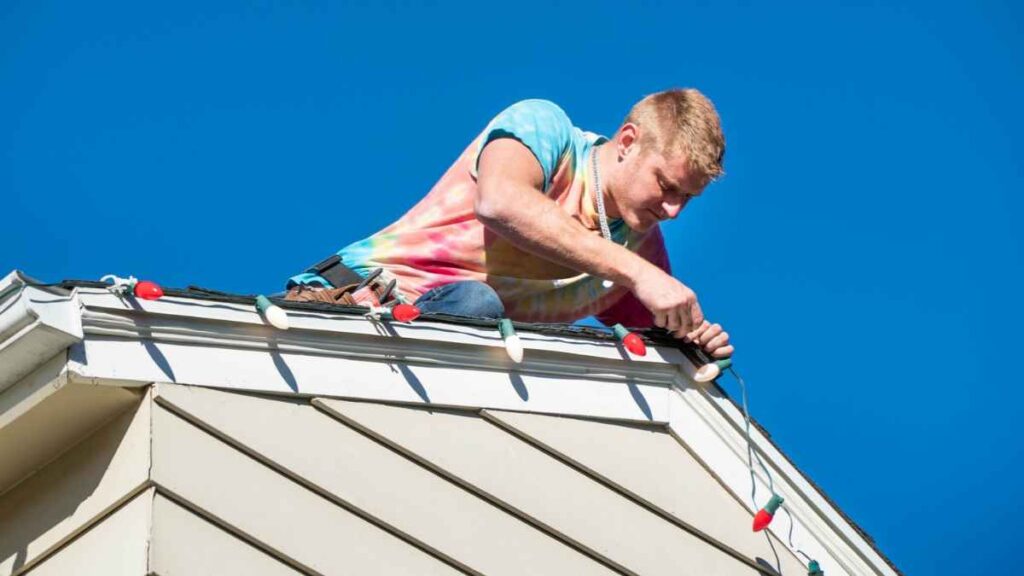
For most homeowners, walking a two-story roof is where risk climbs fastest.
Late fall in Missouri brings frost, morning dew, and fallen leaves. Any of them can make shingles slick without much warning. Asphalt shingles also become stiffer in cold weather and easier to damage underfoot.
If the only way to finish the job is to walk the roof, that’s usually a sign it needs professional equipment and experience.
Electricity and Height Don’t Mix
On a two-story home, electrical safety and fall safety are connected.
A shock on a ladder can quickly turn into a fall.
Plug outdoor lights into a GFCI-protected outlet, or use a portable outdoor GFCI if needed. Make sure lights and extension cords are rated for outdoor use, and keep every connection off the ground and away from water or snow.
Always look up before raising the ladder. On many homes, the electrical service line connects near the upper roofline. A long ladder moving into position can get closer to it than expected.
Missouri Weather Makes Timing Important
A light breeze on the ground can feel much stronger at the top of a tall ladder. Rain, frost, and freezing drizzle make rungs and shingles slippery.
The best time to work is a dry, calm day with plenty of daylight. In the St. Louis area, early to mid-November often offers more of those days than late December.
Start after the morning frost or dew has cleared, and finish well before dusk.
The surfaces around your home matter too. Algae and grime on walkways and patios can make ladder footing less secure. For homes in St. Charles, a fall power washing visit can clean walkways and siding before the decorations go up.
A Common Situation for Two-Story Homes
Consider a homeowner who successfully decorated their previous single-story house for years.
They move into a two-story home and assume the process will be the same.
The first-story lines go up easily. Then they reach the upper roofline. The ladder they own is too short. The ground beside the house slopes. The gutter is higher than expected, and the only way to reach the peak seems to involve stepping onto the roof.
Nothing about their experience was wrong. The house simply changed the project.
When DIY Is Not the Right Choice
Some situations are a clear signal to stop:
- The roof is steep, or the plan requires walking on it
- Power lines run near the roofline or ladder area
- The ladder needed is taller than you’re comfortable handling
- The gutters or fascia are loose or damaged
- No one is available to hold the ladder
- Balance, mobility, or health make long periods on a ladder risky
There’s no shame in deciding the upper roofline isn’t a DIY job.
At Castellan Pro Wash, we can provide help with Christmas lights for homes where height, access, or safety make DIY installation impractical. Our trained technicians handle the ladder work, using commercial-grade LED lights custom-cut to fit your rooflines and non-damaging clips, without drilling holes or using nails.
If a bulb burns out or weather affects the display during the season, we come back and fix it at no additional charge. With our leasing program, you don’t need to buy or store lights, and when the holidays are over, we handle the removal too.
Frequently Asked Questions
How tall of a ladder do I need for a two-story house?
It depends on the roofline, but it should be long enough to sit at a 4-to-1 angle and still extend about three feet above the roof edge.
Is it safe to walk on the roof to hang lights?
For most homeowners, it’s not recommended, especially on a steep roof or in cold, damp weather.
Should I use a metal or fiberglass ladder?
Fiberglass. Metal conducts electricity, and holiday lighting involves live cords.
When should I call a professional?
If the job requires roof walking, working near power lines, overreaching, or using a ladder you’re not comfortable with, professional installation is the safer choice.
Keep Your Feet on the Ground When It Matters
If your second-story roofline is easy to reach safely, careful planning can make DIY installation manageable.
If it requires roof walking, overreaching, or working near power lines, it’s time to rethink the plan.
The goal isn’t just a beautiful display. It’s getting there safely.
Not sure whether your two-story home is a DIY project? Castellan Pro Wash can help you plan and install holiday lighting for homes in O’Fallon, St. Charles, and the surrounding communities, without anyone in your family climbing to the second story.
Contact us now for a free quote.
We invite you to check out our reviews on our GBP.